What Is a Good Cold Email Response Rate? Honest Numbers
Every published cold email benchmark should be read with the question "who benefits from this number being high?" in mind. Most come from companies selling sending tools, drawn from customers who are, by definition, already investing in the channel. The averages are correspondingly optimistic.
Here is a more honest range, sorted by the thing that actually determines the outcome: list quality.
Realistic reply rates
- Purchased or scraped list, generic message: 0.5–2%. Plus deliverability damage that outlasts the campaign.
- Self-built list, correct role, generic message: 2–5%. Right people, nothing specific to say.
- Self-built list, segment-relevant message: 5–12%. Written for a specific situation these companies are actually in.
- Well-researched list with a genuine per-company observation: 15–30%. Slow to produce, and the only reliable route to the top of the range.
- Warm contacts — referral, prior interaction, inbound signal: 30–60%. Not really cold email.
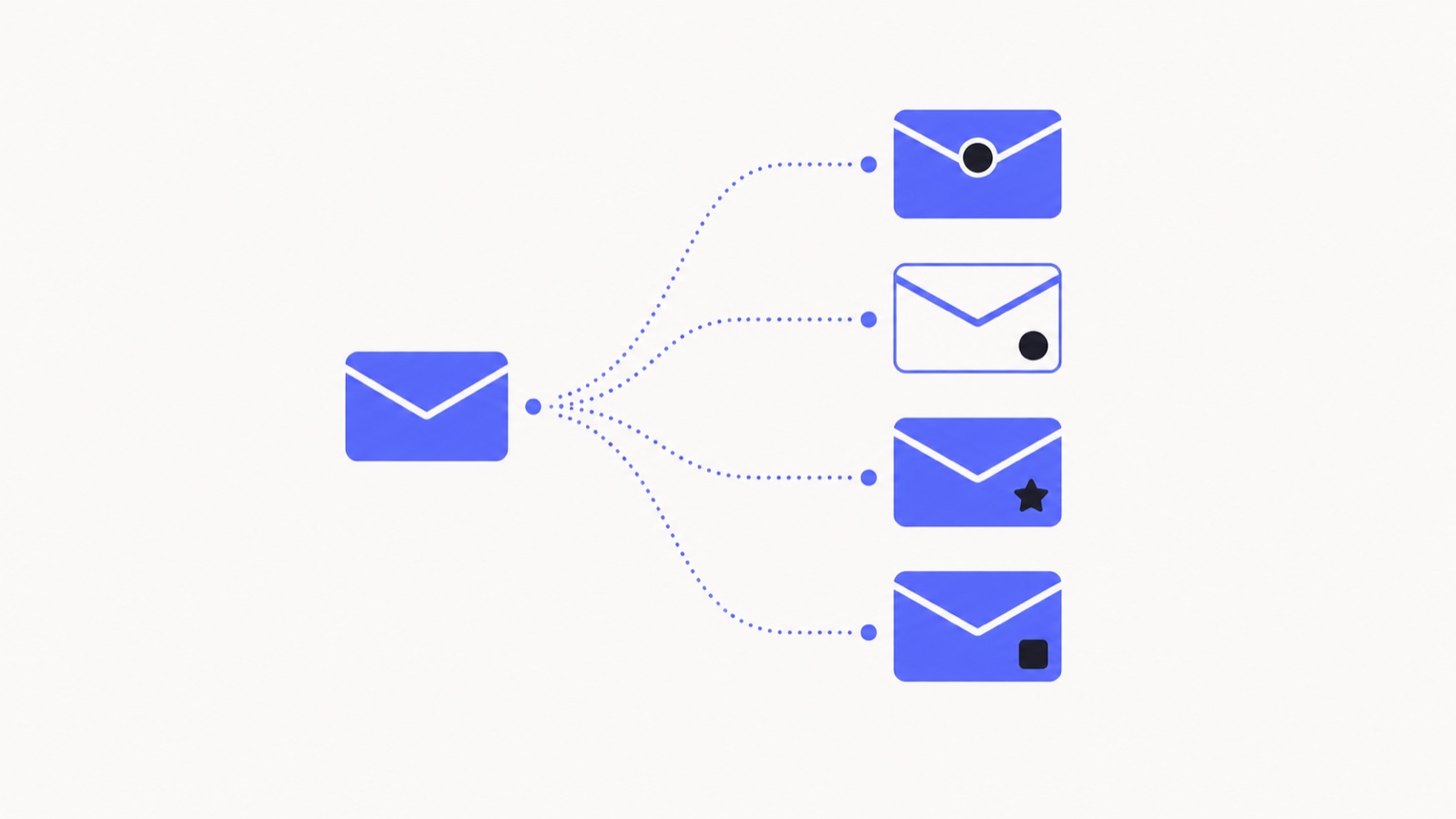
Why "average" is the wrong question
A 3% average across a campaign usually hides two different populations: a well-matched segment replying at 12%, and a poorly-matched one replying at nearly zero and quietly damaging your sender reputation. The average describes neither.
Segment before you optimise. If one segment replies at 12% and another at 0.4%, the correct action is to stop emailing the second, not to rewrite the subject line for both.
The maths of volume versus relevance
Take an hour of work. You can send 500 templated messages, or research and write 20 genuinely specific ones.
- 500 templated at 1% → 5 replies, most of them "unsubscribe". Some spam complaints. Sending reputation slightly worse.
- 20 researched at 20% → 4 replies, mostly from people genuinely in the market. No reputation cost.
Comparable reply counts, radically different quality — and the second approach compounds while the first decays. Every low-quality send makes the next one land slightly worse, because engagement is the dominant factor in filtering. The mechanics are in the email deliverability checklist.
The practical middle ground — segment-level relevance plus one researched observation per contact — is described in how to personalise cold emails at scale.
Counting properly
Three things distort reported reply rates, all in the flattering direction:
- Counting all replies, including negatives. "Unsubscribe" and "wrong person" are replies. A positive reply rate is the number that means something, and it is usually about half the headline.
- Measuring per campaign rather than per contact. A four-touch sequence to 100 people is 400 sends. Reply rate per *contact* is what matters; per *send* is a quarter of it and looks worse than it is.
- Ignoring bounces and non-delivery. If 15% never arrived, your denominator is wrong — and a bounce rate that high is itself the more urgent problem.
What actually moves the number
In descending order of impact:
- Targeting. Are these people plausibly in the market? Nothing else comes close.
- Timing and trigger. Reaching someone the week they started hiring for the problem you solve beats any copy.
- Specificity. One true observation about them.
- Deliverability. A message in spam has a 0% reply rate regardless of quality — see why emails land in spam.
- Follow-up. Most replies arrive on touch two, three or four. Sending once and stopping forfeits the majority of your results.
- Copy. Real, and last. Rewriting the subject line of a badly-targeted campaign is rearranging deck chairs.
That fifth point is the cheapest available improvement for most people. Structure in the cold email follow-up sequence.
What to track
Positive reply rate per contact, by segment. That is the number. Open rate is a deliverability alarm rather than a performance metric — a noisy, inflated estimate, for reasons covered in open rate vs reply rate.
The one exception worth watching: zero opens across an entire segment almost always means a delivery problem, not a targeting one. Fixing that is usually worth more than any amount of copy iteration.
MailSenseAI tracks opens, clicks and replies per thread so you can see which segments actually produce conversations, and drafts the follow-up when a thread goes warm. Free and unlimited.
See it in your own inbox
Know what happens after you hit send.
MailSenseAI shows opens, clicks, and replies in real time — right inside Gmail — so you follow up at the moment interest is highest.
Add to Gmail · free